Ten Years of E-Residency: We Checked In With Five Americans Who Took the Plunge

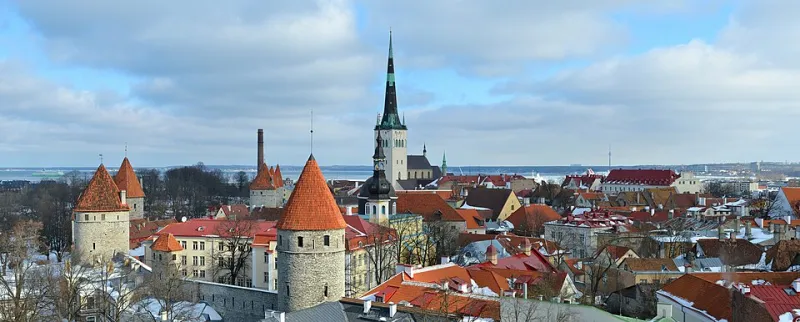
Photo: Flcikr user: perzon seo, CC BY 2.0, via Wikimedia Commons
The pitch is seductive: become a digital resident of Estonia, run your company from anywhere, and never set foot in Tallinn unless you want to. It's been sold to American founders for more than ten years now, and tens of thousands of us have signed up. But marketing materials don't tell you what year three looks like. Or year seven.
So we went looking for the long game. We tracked down five Americans who became e-residents at very different points in the program's life — the early adopter, the skeptic-turned-convert, the solo operator, the venture-backed founder, and the one who'd tell you it didn't work out. Their stories are messier than the landing page, and a lot more useful.
The Early Adopter Who Grew Up With the Program
Marcus Delaney, a product designer from Portland, signed up in 2015, when the program was still rough around the edges. "Banking was the nightmare," he admits. "I had this digital identity and nowhere to actually put money."
He stuck it out anyway, incorporating a design consultancy that now serves clients in six countries. His verdict after nearly a decade: the infrastructure eventually caught up to the promise, and being early meant he built his entire back office — accounting, compliance, taxes — on tools designed for the system rather than bolted onto it. His American peers, he says, are still paying bookkeepers to reconcile a mess he never created.
The Solo Consultant Running a One-Person Multinational
Rebecca Okafor, an HR consultant in Atlanta, is the program's purest expression. One person, one Estonian OÜ (that's a private limited company), clients in London, Amsterdam, and Toronto.
"I priced myself as a European vendor, which changed the conversation completely," she told us. "US-based independent consultants get treated like freelancers. My Estonian entity gets treated like a firm."
Her honest caveat: the annual compliance costs run a few thousand euros, which only makes sense if you're billing enough to justify the structure. Below roughly $60,000 in annual revenue, she says, it's probably overkill.
The VC-Backed Founder Who Used It as a Bridge
The most interesting case is a SaaS founder (who asked to remain anonymous ahead of a pending acquisition) whose Delaware startup was stuck in a visa mess for a key European hire. The workaround: an Estonian subsidiary, spun up in weeks, that employed the engineer legally while immigration paperwork crawled through the American system.
"It was a side door, and I'm not embarrassed about that," he said. The subsidiary still exists, now housing the company's entire European sales function. What started as a workaround became a permanent advantage.
The One Who'd Do It Differently
Not every story is a win. A Denver-based e-commerce operator told us, bluntly, that he incorporated in Estonia for the wrong reasons — he'd read a Twitter thread, wanted to feel international, and didn't have a clear business case. VAT registration across multiple EU countries ate his margins, his accountant bills doubled, and he eventually wound the entity down.
His advice to his past self: "Estonia is a tool, not a vibe. If your customers aren't in Europe and you're not raising international capital, ask yourself what problem you're actually solving."
What They'd All Tell You Before You Sign Up
Across all five conversations, three themes kept surfacing:
Banking is the bottleneck, not the paperwork. Incorporating takes an afternoon. Finding a bank or payment provider that fits your business model takes weeks of homework.
Taxes don't disappear — they relocate. E-Residency doesn't change where you owe personal taxes. Every one of them learned this from a CPA eventually. Talk to one first.
The network is the hidden feature. Four of the five said their best opportunities came from other e-residents and the Tallinn founder community, not from the digital ID itself.
Ten years in, the program's real legacy isn't the companies registered on Estonian soil. It's a generation of American founders who learned that the default way of building a business isn't the only way — and who now expect every government, including their own, to compete for their incorporation. That expectation might be the most disruptive export Estonia has ever shipped.