One Exit, Twenty Years of Founders: The Compounding Magic America Keeps Fumbling
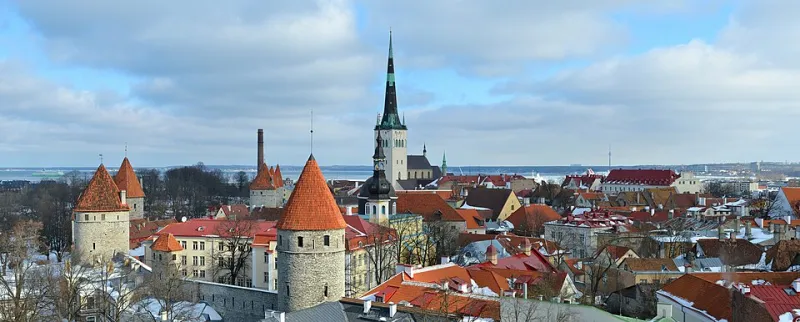
Photo: Ivar Leidus (Iifar), CC BY-SA 3.0 ee, via Wikimedia Commons
Here's a thought experiment for American readers: name a single acquisition that changed your city's economy for the next twenty years.
You probably can't, and that's the point. In the US, billion-dollar exits are absorbed like rain into an ocean — folded into the balance sheets of Microsoft, Google, or whatever mega-cap wrote the check. Talented people get retention packages and stay put. The wealth diffuses into index funds and NDA'd vesting schedules.
Estonia took the same event and got a completely different result. And the story of how is worth every American policymaker's attention.
What Actually Happened
Skype was written largely by Estonian engineers — the Tallinn office built the core of the product, and the company remains the founding legend of Estonian tech. When eBay offloaded it and Microsoft eventually bought the whole thing in 2011 for $8.5 billion, something unusual happened: the money and, more importantly, the people came home.
The numbers tell the story better than any speech. Skype alumni went on to found or fund a startling share of Estonia's startup ecosystem — estimates suggest Skype veterans and their capital touched hundreds of Estonian startups. The company's former engineers seeded funds like Tera Ventures and contributed to early-stage vehicles that simply didn't exist in the Baltics before. Founders of Bolt, TransferWise (Wise), Pipedrive, and Starship Technologies all trace DNA back to that one office. Estonia now punches so far above its weight in unicorns per capita that it borders on statistical embarrassment for countries 100 times its size.
Why the Compounding Worked
Three conditions made the Skype exit combustible rather than merely lucrative.
Density. Estonia is small. When Skype money landed, it landed in a community where everyone knew everyone. An angel check in Tallinn travels with introductions, hiring help, and brutal honest feedback. In the Bay Area, the same check disappears into a portfolio.
Velocity. The alumni didn't retire. They started companies, then angel-invested, then started funds, then mentored at accelerators — all within a few years. Each role recycled experience back into the system.
Legitimacy. Perhaps most importantly, Skype proved it was possible. A kid in Tartu could look at Skype and see a path from a Soviet-legacy apartment block to a global exit. That proof did more for Estonia's founder pipeline than any subsidy program ever could.
The American Counterexample
The US produces vastly more exits, so why doesn't it get this effect? It does — locally, occasionally, spectacularly. The PayPal mafia is the canonical example, and it's telling that we had to reach back two decades for the standard reference.
But at national scale, American exits are extraction events. A founder in Austin sells to a giant in Redmond; the engineering team gets absorbed, the acquirer sunsets the product, and the capital becomes a line item. The compounding happens inside the acquiring company's stock price, not inside the community that created the value.
Estonia had no mega-caps to absorb its exit. That constraint — usually framed as a weakness — turned out to be the secret. The money had nowhere to go but back into the scene.
The Lesson Hiding in Plain Sight
If you're an American economic development official, the takeaway isn't "hope for a Skype." It's to engineer the conditions that let exits compound: dense founder networks, fast recycling of talent into the next generation, and visible proof that building locally can end globally.
Estonia ran the experiment with a control group of one small country and a single catalytic event. Twenty years later, the results are still compounding. America's exits are bigger. Estonia's echo is louder. That difference is a choice — and choices can be changed.