Forget the Flashy Apps: How Estonia's 'Boring' Startups Are Quietly Minting Real Returns

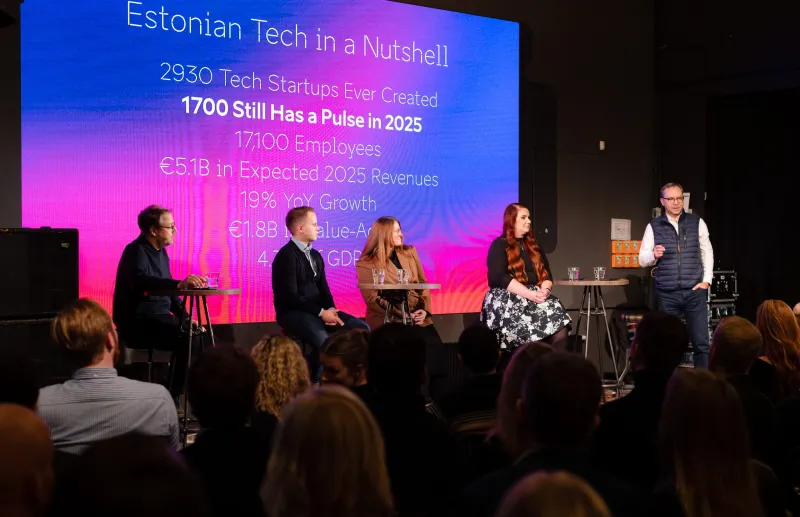
Photo by Photo by Marek Lumi on Unsplash on Unsplash
There's a certain kind of startup pitch that makes a venture capitalist's eyes light up. It usually involves the words "AI-native," "consumer-first," and a TAM slide that claims the addressable market is basically everyone on earth. Estonian founders, increasingly, are not giving that pitch. And weirdly? That's exactly why American investors are starting to pay closer attention.
Tallinn has quietly become a hub for a category of companies that don't get feature profiles in Wired but do something arguably more valuable: they make supply chains run cleaner, logistics networks move smarter, and operational systems hum without anyone noticing. That invisibility, it turns out, is the whole point.
The Anti-Hype Playbook
Estonia's startup culture didn't emerge in a vacuum. It was forged by necessity — a small country with limited domestic market size, a deep engineering tradition, and a government that digitized itself before most nations figured out how to send a fax securely. The founders who came up in that environment learned early that you don't build for virality when your addressable market is 1.3 million people. You build for function, for export, and for durability.
That mindset has produced a generation of companies that American observers might charitably call "un-sexy" — freight optimization platforms, warehouse management systems, cross-border compliance tools, industrial IoT software. Not the stuff of Super Bowl ads. But increasingly, the stuff of consistent 30-40% year-over-year revenue growth and customer retention rates that consumer app founders would trade their Series B for.
"We never tried to be interesting," one Tallinn-based logistics tech founder told us. "We tried to be indispensable." That distinction matters more than it sounds.
Why American VCs Are Quietly Shifting
The past two years have been humbling for a slice of the venture world that bet heavily on consumer apps, social platforms, and direct-to-consumer plays. Valuations corrected. Retention curves flattened. The "growth at all costs" era ran headlong into an interest rate environment that suddenly cared about unit economics.
Into that hangover stepped a handful of US-based funds — some well-known, some operating below the radar — that started running screens on European operational tech. Estonia kept surfacing. Not because of marketing. Because the numbers were clean.
B2B infrastructure software has a particular advantage in a tighter funding environment: enterprise customers pay on contract, churn slowly, and tend to expand their usage over time rather than delete the app after a novelty cycle. Estonian companies in this space have been running that model for years, often bootstrapping longer than their Silicon Valley counterparts because they didn't have access to the same easy capital. That constraint, paradoxically, made them leaner and more defensible.
Several American funds have made initial bets in the Estonian operational tech space in the last 18 months — not enormous checks by Sand Hill Road standards, but meaningful signals. The due diligence conversations, by multiple accounts, have been refreshingly short on storytelling and long on metrics.
The Infrastructure Founders You Haven't Heard Of (Yet)
It would be easy to anchor this story to Bolt or Pipedrive — the Estonian unicorns that already have name recognition in US startup circles. But the more interesting thread right now is happening one layer below the unicorn tier.
There are founders in Tallinn building port logistics software that's being piloted by mid-size European freight operators and starting to attract interest from US Gulf Coast shippers. There are teams working on cold chain compliance tools that sit at the intersection of food safety regulation and real-time IoT tracking — a space that's suddenly very relevant given how much the US has struggled with supply chain visibility since 2020. There are B2B platforms handling the unglamorous work of cross-border VAT reconciliation and customs documentation that any company trying to sell physical goods into the EU needs to navigate.
None of these are household names. All of them have paying customers, positive gross margins, and founders who can explain their churn rate without checking a slide deck.
What Estonia Gets That Silicon Valley Keeps Forgetting
There's a cultural dimension here that's worth naming. Estonia's relationship with digital infrastructure is fundamentally different from America's. In the US, "infrastructure" is often a political football — something that gets underfunded, argued about, and occasionally the subject of a bipartisan bill that takes a decade to implement. In Estonia, digital infrastructure is just... the baseline. It's how the government works, how businesses file taxes, how citizens access services.
Founders who grew up in that environment don't see infrastructure as a boring problem to be avoided. They see it as the foundation everything else is built on — which means building better infrastructure is, by definition, building something that matters.
That perspective shift is subtle but it produces meaningfully different companies. When your instinct is to ask "what needs to work reliably at scale" rather than "what will go viral," you end up solving different problems. Problems that enterprises will pay for year after year.
The Lesson for American Founders
There's an uncomfortable implication here for the US startup ecosystem, which has spent the better part of a decade optimizing for narrative over fundamentals. Estonian operational tech is a quiet rebuke to the idea that the most fundable companies are necessarily the most interesting ones to talk about at a dinner party.
The American VCs who are paying attention to Tallinn right now aren't doing it because Estonia is suddenly cool. They're doing it because the portfolio math is starting to look different. Boring, it turns out, compounds nicely.
If you're a US founder who's been told your logistics or supply chain idea isn't exciting enough for a VC meeting, you might want to look at what's happening in a small Baltic country that decided "exciting" was overrated. The Estonians figured out something the hype cycle hasn't fully priced in yet: the companies that keep the world running tend to stick around longer than the ones trying to disrupt it.
And right now, a growing number of American investors are quietly writing checks to make sure they're on the right side of that equation.