Why a Nation Smaller Than Dallas Keeps Minting Billion-Dollar Tech Companies
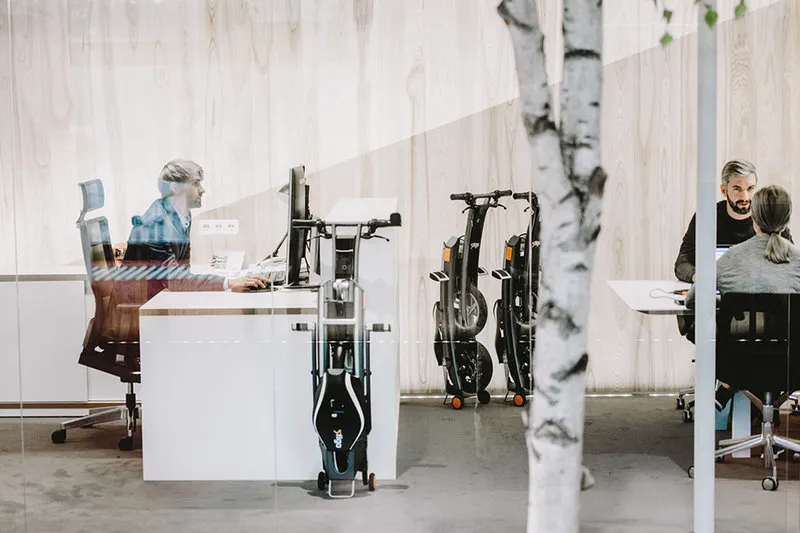
Photo: Estonia tech startup office Tallinn entrepreneurs working modern coworking, via magazine.verdict.co.uk
Let's do the math real quick. Estonia has 1.3 million people. San Jose, California — not even the biggest city in the Bay Area — has about 1.1 million. And yet Estonia has produced more billion-dollar tech companies per capita than almost any country on Earth, including the United States.
Skype. TransferWise (now Wise). Bolt. Pipedrive. Taxify. Veriff. Starship Technologies. The list keeps growing, and it keeps getting weirder — because there's no obvious reason a small, post-Soviet Baltic nation should be one of the most fertile startup ecosystems on the planet.
Except there is a reason. Several, actually. And they're worth understanding if you're building anything anywhere.
The Skype Effect: When One Win Changes Everything
The origin story of Estonian tech is inseparable from Skype. When the voice-over-IP platform was acquired by eBay in 2005 for $2.6 billion, it didn't just make a handful of founders rich — it seeded an entire generation of Estonian tech culture.
The engineers and early employees who cashed out didn't move to Monaco. They stayed in Tallinn. They became angel investors, mentors, and co-founders for the next wave of startups. That recycling of capital and knowledge is what startup ecosystems run on, and Estonia got a massive injection of it from a single deal.
"The Skype mafia is real," says one Tallinn-based VC who asked not to be named for this piece. "You trace the cap tables of Estonian startups from 2008 to 2018 and Skype money shows up everywhere. It wasn't just cash — it was credibility. It told the world that serious tech could come out of here."
America has seen this pattern domestically — PayPal's early employees seeded half of Silicon Valley's second generation. Estonia just compressed that same dynamic into a much smaller geography.
Education as Infrastructure
Here's something that doesn't get enough attention in American tech media: Estonia introduced computer programming into its primary school curriculum in 2012. Not as an elective. As a core subject, starting at age seven.
The program, called ProgeTiiger, operates on the premise that coding literacy is as fundamental as reading or arithmetic. By the time Estonian students hit high school, algorithmic thinking isn't a niche skill — it's just how problems get solved.
Contrast that with the US, where access to computer science education is still largely determined by zip code and school district budget. A kid in rural Estonia and a kid in Tallinn's tech district are getting roughly the same foundational tech education. A kid in rural Alabama and a kid in Palo Alto are not.
This matters for the startup ecosystem because it expands the talent pool dramatically. You don't need to recruit exclusively from MIT and Stanford when your entire country has a baseline of technical literacy.
Small Market, Global Mindset — By Necessity
One of the most counterintuitive advantages of building a startup in Estonia is the tiny domestic market. With only 1.3 million potential customers, no serious Estonian founder ever thinks locally. From day one, the product roadmap is global.
This forces a discipline that American startups often skip. When you can't survive on domestic traction, you have to build something genuinely exportable from the very beginning. Localization, international payment rails, multi-currency support — these aren't afterthoughts for Estonian founders. They're table stakes.
Wise (formerly TransferWise) is the perfect case study. Taavet Hinrikus and Kristo Käärmann built a cross-border money transfer platform because they personally experienced the absurdity of international bank fees as Estonians living abroad. The pain point was global. The solution was global. The company is now worth over $11 billion.
That global-first mindset is something American founders — who often have the luxury of a 330-million-person home market — actively have to cultivate. Estonian founders have it by default.
The Policy Ecosystem: Where Government Actually Helps
We've covered Estonia's digital government in other pieces, but it's worth noting how that infrastructure directly benefits startup founders. Registering a company in Estonia takes 18 minutes online. Not 18 business days. Not 18 steps involving a notary, a registered agent, and a check mailed to a state capitol. Eighteen minutes.
The e-Residency program means founders from anywhere in the world can set up an EU-based legal entity without relocating. That's been a massive draw for international entrepreneurs who want European legitimacy without European bureaucracy.
Estonia also has a 0% corporate tax on reinvested profits — meaning if you plow your earnings back into the company rather than distributing dividends, you don't pay corporate tax. For early-stage startups trying to extend runway, that's a meaningful structural advantage.
None of this happened by accident. The Estonian government made deliberate policy choices to reduce friction for founders. American state governments, by contrast, often seem to compete for who can make incorporation most confusing.
The Culture of Lean: Building Without the Bloat
Spend time with Estonian founders and a few cultural patterns emerge quickly. There's a deep skepticism of vanity metrics, a preference for profitability over perpetual fundraising, and an almost reflexive aversion to unnecessary headcount.
Part of this is practical — Estonia doesn't have a massive pool of venture capital to burn through, so founders learned to be efficient with resources. But part of it is cultural. There's a certain Nordic-adjacent stoicism in Estonian startup culture that treats frugality as a virtue rather than a constraint.
Bolt, the ride-hailing and delivery platform that competes with Uber across Europe and Africa, reached a $8.4 billion valuation while maintaining notoriously lean operations. Founder Markus Villig started the company at 19, raised his first round from family and friends, and built a product that worked before he started spending on growth. That sequencing — product first, scale second — runs counter to the blitz-scaling playbook that dominated American VC culture for a decade.
Given how many blitz-scale disasters we've watched unfold (WeWork, anyone?), the Estonian approach is looking pretty smart right now.
What American Founders Can Actually Take Away
You can't copy-paste Estonia's startup ecosystem into Austin or Miami. The context is too different — different regulatory environment, different talent market, different cultural baseline. But there are transferable principles worth internalizing:
Build global from day one. Even if your initial market is domestic, design your product architecture to scale internationally. Language, currency, compliance — don't make these an afterthought.
Treat efficiency as a competitive advantage. The era of burning VC money to buy growth is over. Estonian founders who never had that option are better positioned for the current environment.
Invest in technical education broadly. The companies that will define the next decade need engineers, designers, and product thinkers who can come from anywhere — not just elite universities.
Reduce bureaucratic friction. Every unnecessary step between "idea" and "incorporated company" is a startup that doesn't get started. American states that streamline this process will attract more founders.
The Punchline
Estonia shouldn't work as a startup ecosystem. It's too small, too remote, too recently emerged from Soviet occupation. It doesn't have Stanford. It doesn't have Sand Hill Road. It doesn't have the kind of weather that makes people want to move there in February.
And yet it keeps producing companies that reshape industries, attract global investment, and build products that hundreds of millions of people use every day.
The secret isn't magic. It's deliberate choices — in education, in policy, in culture — that compound over time. Silicon Valley had a 40-year head start, but Estonia is closing the gap faster than anyone expected.
Pay attention.
Eesti Digital is your guide to everything Estonia is building — and what America can learn from it. Follow us for weekly dispatches from the Baltic tech frontier.